Phone:
(701)814-6992
Physical address:
6296 Donnelly Plaza
Ratkeville, Bahamas.

Phone:
(701)814-6992
Physical address:
6296 Donnelly Plaza
Ratkeville, Bahamas.

When it comes to keeping reptiles, the terrarium is more than just a container—it’s their home. I’ve spent years exploring the best ways to design reptile terrariums that are both beautiful and functional. Whether you’re a beginner or a seasoned reptile keeper, I’m here to provide the most accurate, practical, and inspiring ideas to transform your terrarium into a thriving reptile paradise.
So, what are the top reptile terrarium ideas? From naturalistic setups to minimalist designs, each idea focuses on creating the perfect balance of environment, comfort, and aesthetics for your reptile. These ideas cover everything from lighting and substrate choices to decorative elements and space optimization—all tailored to different reptile species and home styles.
Stick around to discover 17 innovative reptile terrarium ideas that will help you design a healthy, stylish habitat your reptile will love. These ideas include tips you won’t find in typical care guides, ensuring your terrarium stands out.
Your reptile’s terrarium isn’t just about looks—it’s about replicating their natural environment to promote health and happiness. A well-designed terrarium caters to their needs for humidity, temperature, climbing space, and hiding spots. Plus, a thoughtfully styled terrarium adds a unique touch to your home decor.
In this article, I’ll walk you through 17 distinct reptile terrarium ideas, each with practical design tips. Whether you prefer a lush jungle vibe or a sleek modern look, you’ll find inspiration that suits your taste and your reptile’s specific needs.
Let’s dive into these ideas and discover how you can elevate your reptile’s home to a whole new level.
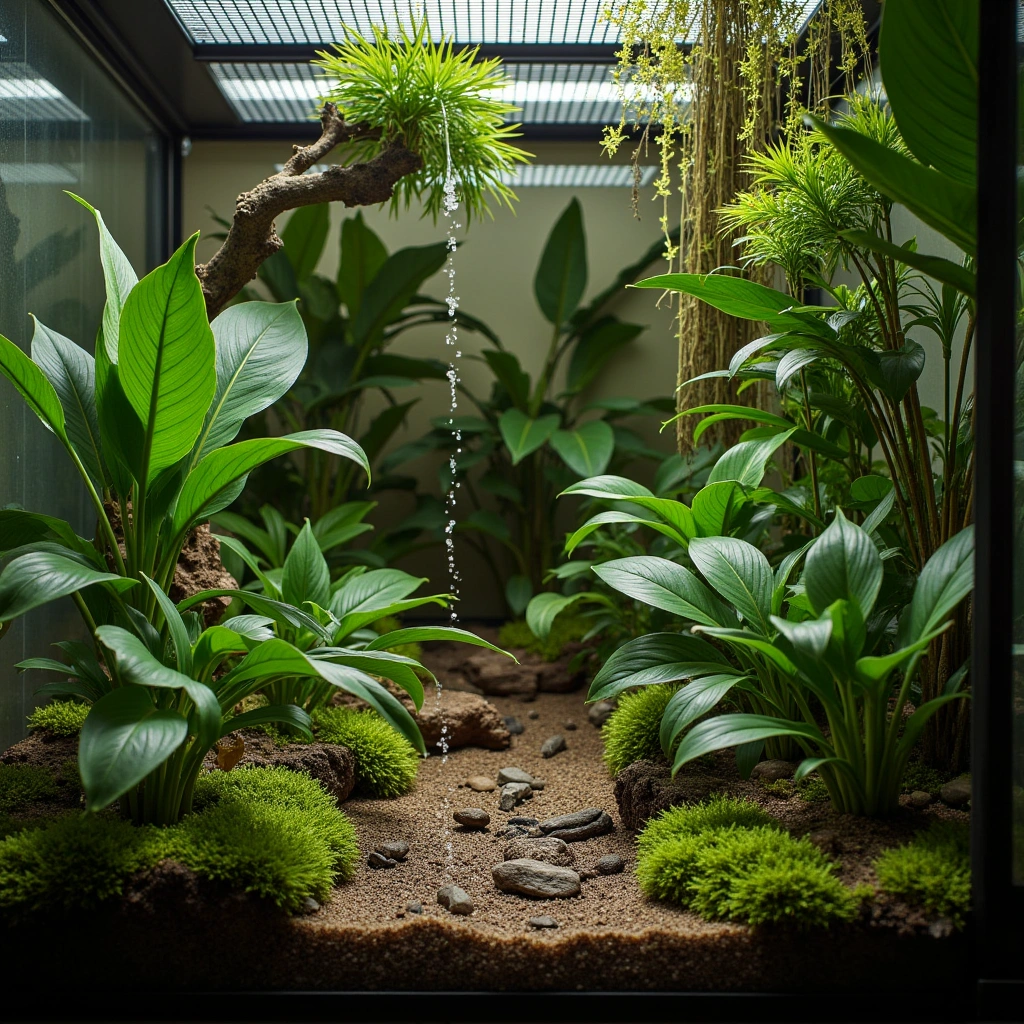
Creating a rainforest terrarium works beautifully for species like green tree pythons or crested geckos. This design mimics a dense jungle setting with abundant live plants, moss, and drip water systems for humidity.
Use a mix of broadleaf plants like pothos or bromeliads to provide climbing surfaces and hiding spots. Include natural wood branches for a sturdy climbing framework. Choose a substrate that retains moisture well, such as coconut fiber.
Add a small water feature or misting system to maintain humidity between 70-90%. Warm LED lights with UVB bulbs help plants and reptiles thrive. This setup fits well in tropical-themed rooms or boho interiors.
Try arranging plants at different heights to create depth—it encourages natural exploration and looks stunning from all angles.
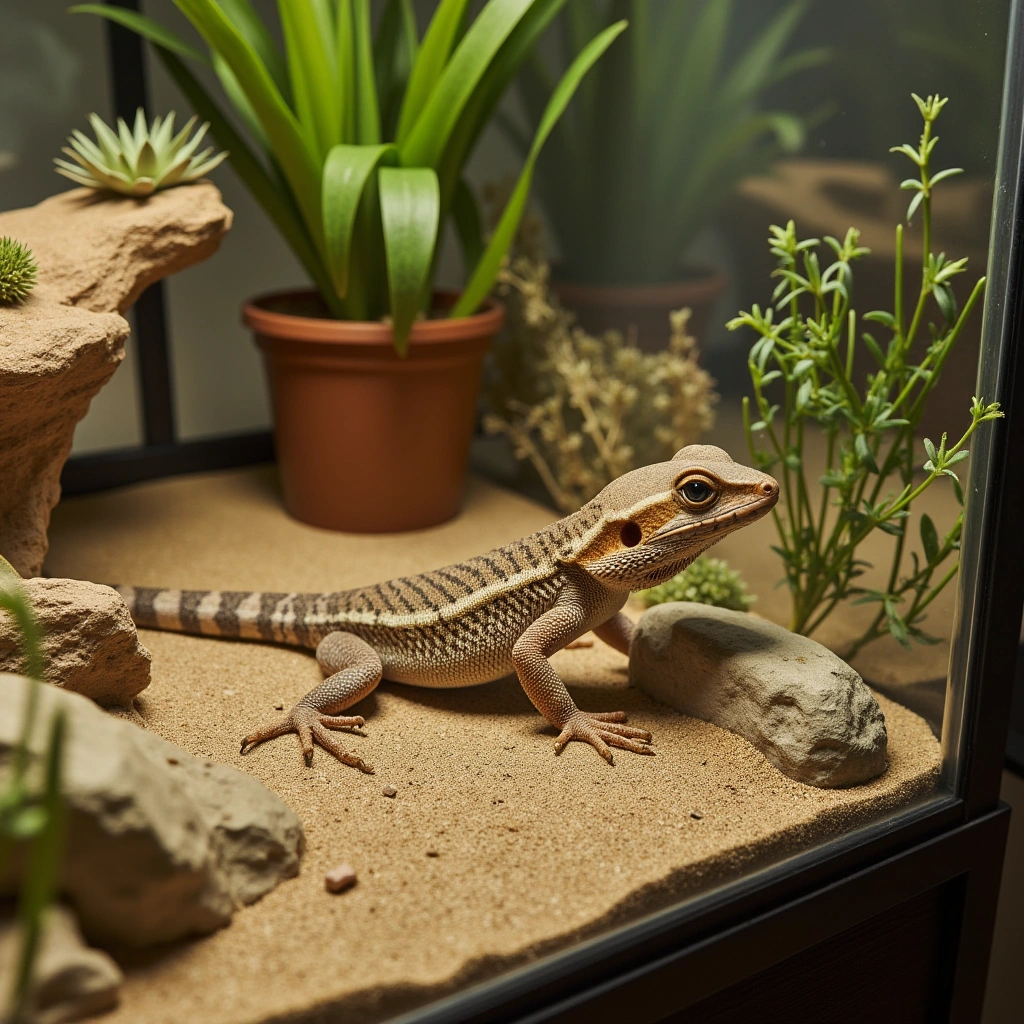
Desert reptiles like bearded dragons or leopard geckos thrive in terrariums that replicate arid, sun-drenched landscapes. This design emphasizes sandy substrates, rocks, and sparse vegetation.
Opt for warm colors like terracotta, beige, and burnt orange to evoke desert vibes. Use heat lamps and UVB lighting to mimic the sun’s intensity. Include flat stones for basking and caves for shelter.
Succulents and hardy desert plants like aloe or agave add a touch of green without requiring much moisture. The minimalist plant choice keeps the terrarium low-maintenance.
This design complements southwestern or rustic home styles and is perfect if you want a clean, organized look with natural textures.
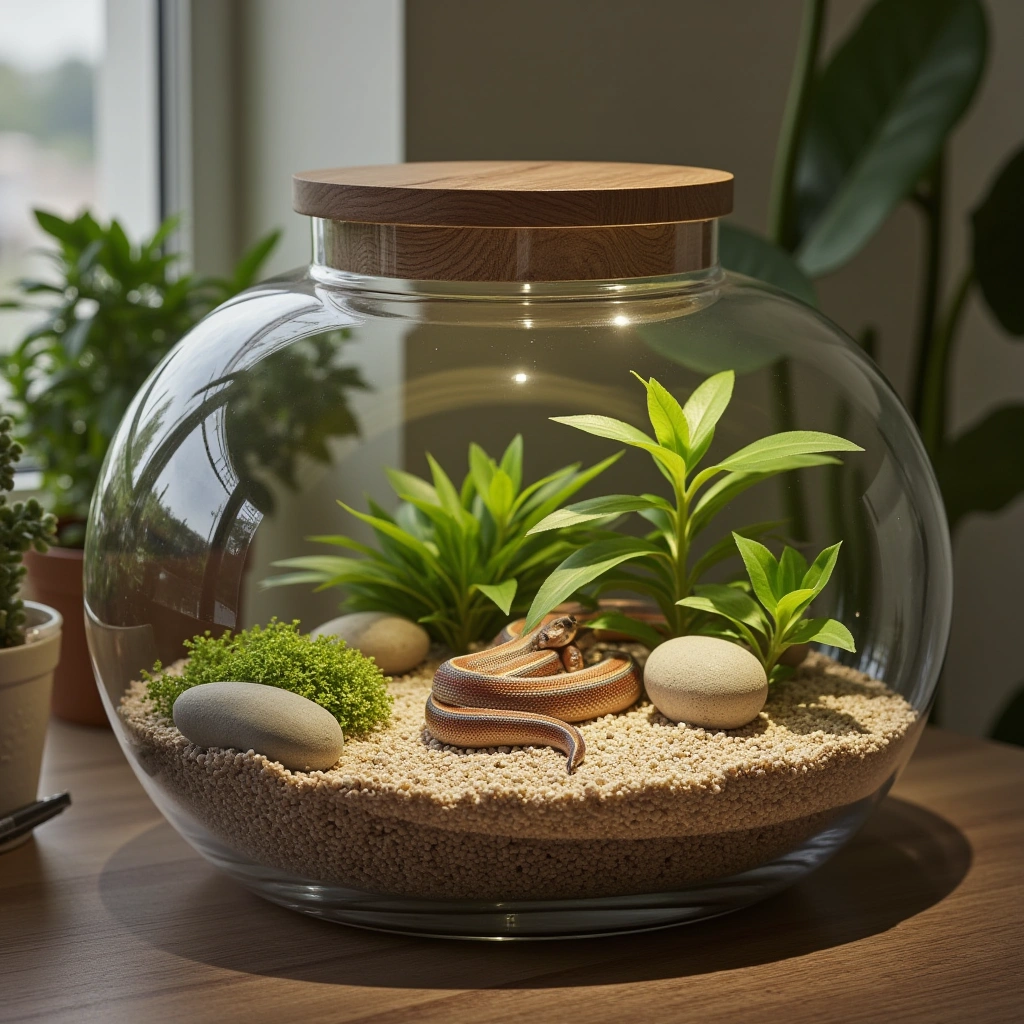
For those who love simplicity, a Zen minimalist terrarium offers a calm, uncluttered space for reptiles such as ball pythons or anoles. Focus on smooth stones, a few well-placed plants, and clean lines.
Use a neutral substrate like fine sand or pebble gravel. Add one or two elegant driftwood pieces to create focal points. Lighting should be soft and indirect, avoiding harsh contrasts.
This design blends well with modern and Scandinavian interiors, offering a peaceful vibe. Minimalism also makes terrarium maintenance easier since there are fewer elements to clean.
Keep decorations to a minimum but choose each piece thoughtfully for visual balance and reptile comfort.
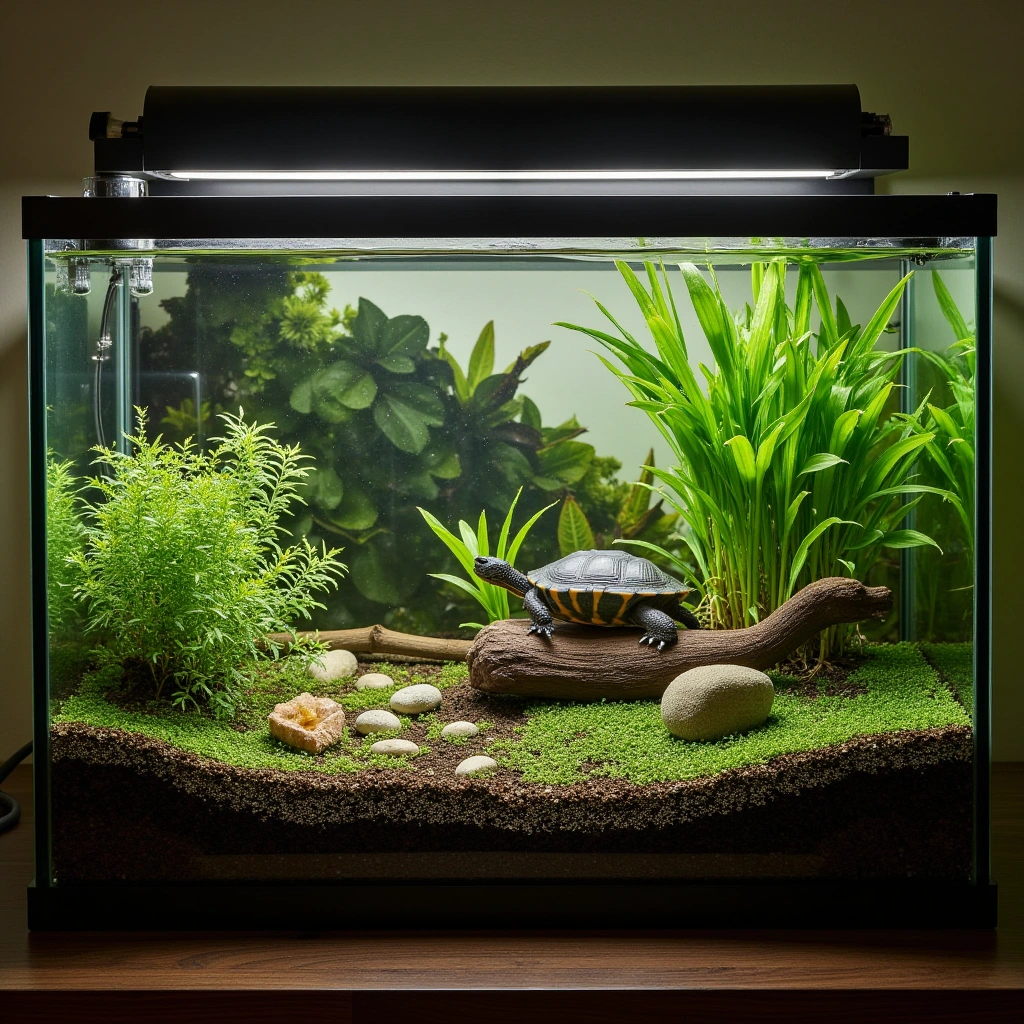
A paludarium combines water and land, perfect for semi-aquatic reptiles like newts or certain turtles. This setup includes an aquatic area with live water plants alongside a terrestrial zone with soil and greenery.
Incorporate a filtration system to keep water clean and oxygenated. Use waterproof lighting to illuminate both the land and water sections evenly.
Decorate the water section with floating plants, rocks, and driftwood, while the land area features moss and tropical plants. This provides your reptile with diverse habitats to explore.
Paludariums add a lush, dynamic feel and fit well in eclectic or nature-inspired interiors.
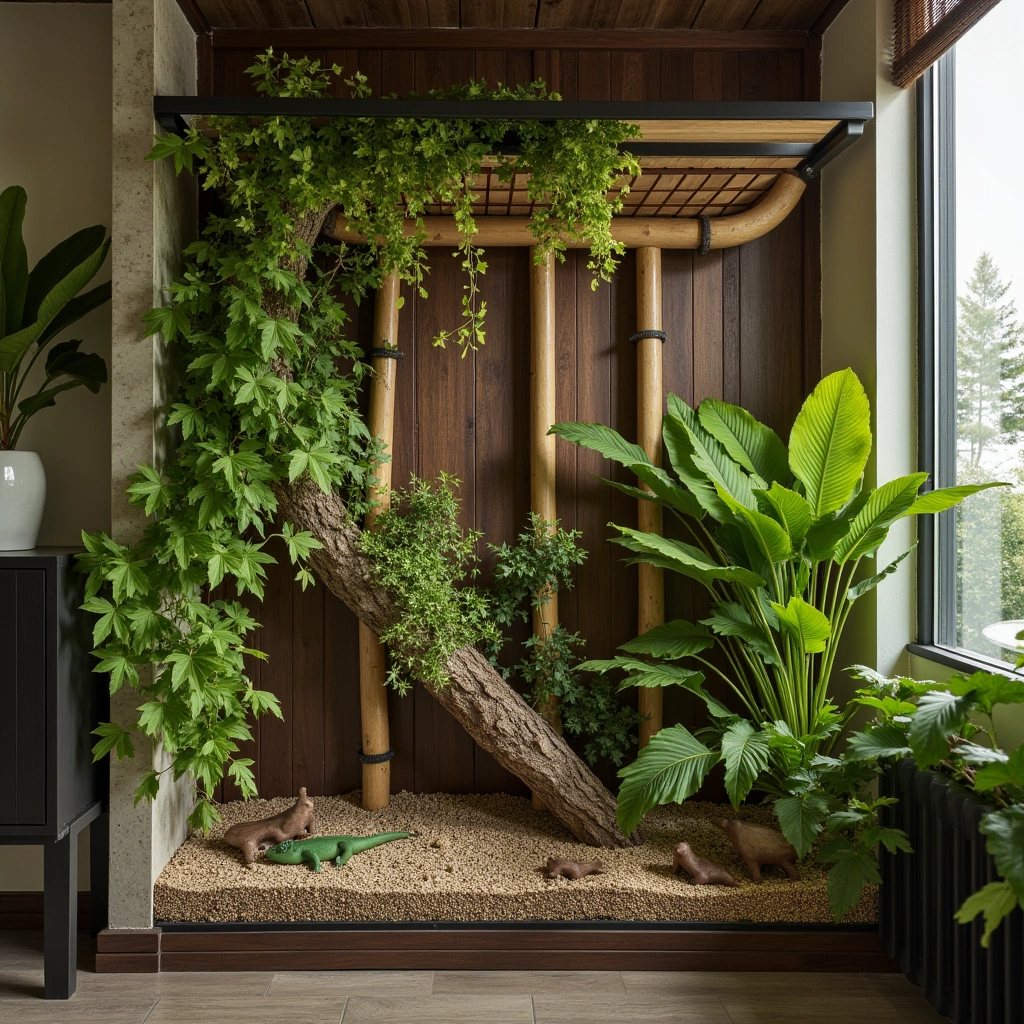
For arboreal reptiles like chameleons or green anoles, vertical space is key. A tall terrarium filled with vertical climbing structures encourages natural behavior.
Use large branches, bamboo poles, and vines to create a multi-level climbing playground. Add plenty of foliage to provide cover and humidity.
Lighting should include UVB bulbs positioned at the top, with heat sources placed strategically for basking spots.
Choose a terrarium with height over width to maximize climbing space. This design suits modern homes with limited floor space but plenty of vertical room.
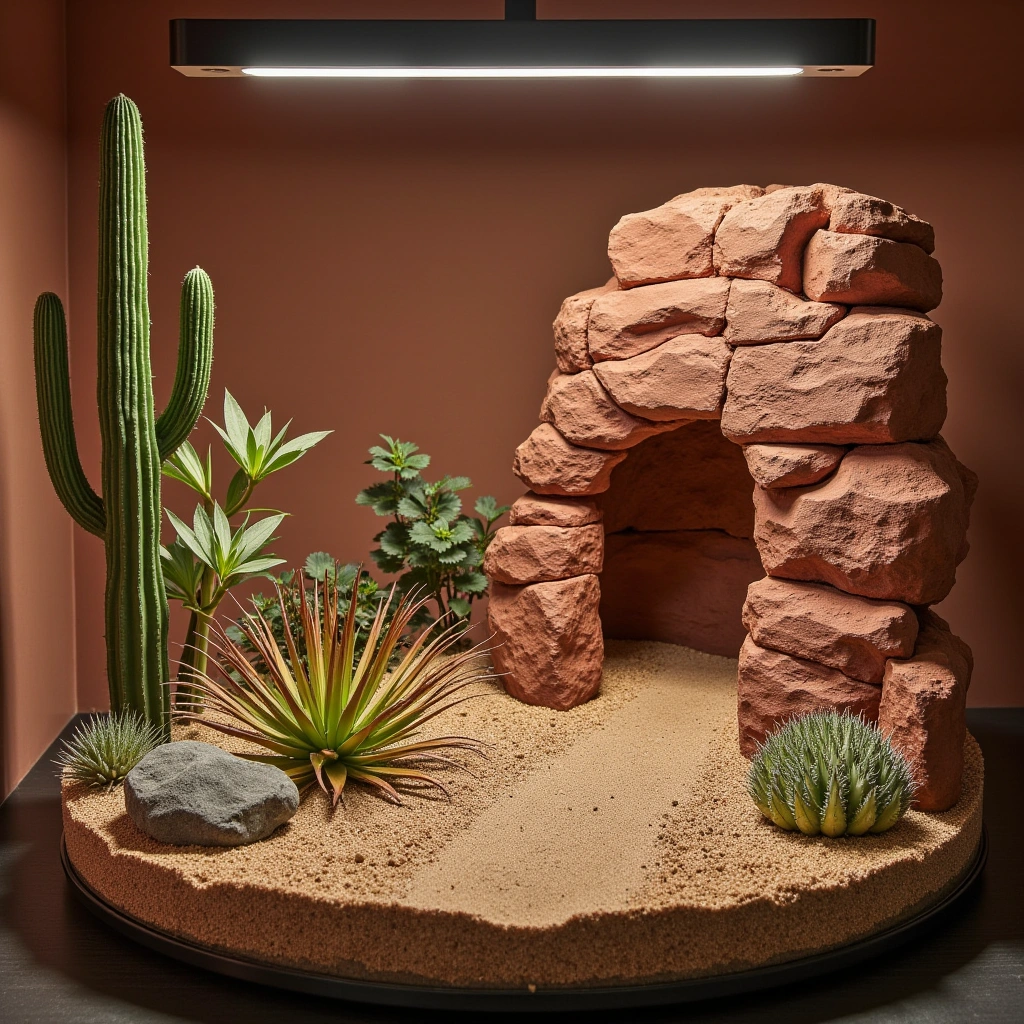
Take desert terrariums up a notch by replicating specific desert biomes like the red rock canyons of the American Southwest. Use warm red sandstone and rugged rock features to build dramatic landscapes.
Incorporate small desert plants like cacti and yucca. Use a sandy substrate mixed with gravel for authenticity.
Lighting mimics harsh sunlight with bright, warm LEDs. Add a basking platform with flat rocks for your reptile to soak up heat.
This design creates an eye-catching natural sculpture that acts as both a habitat and a living piece of art.
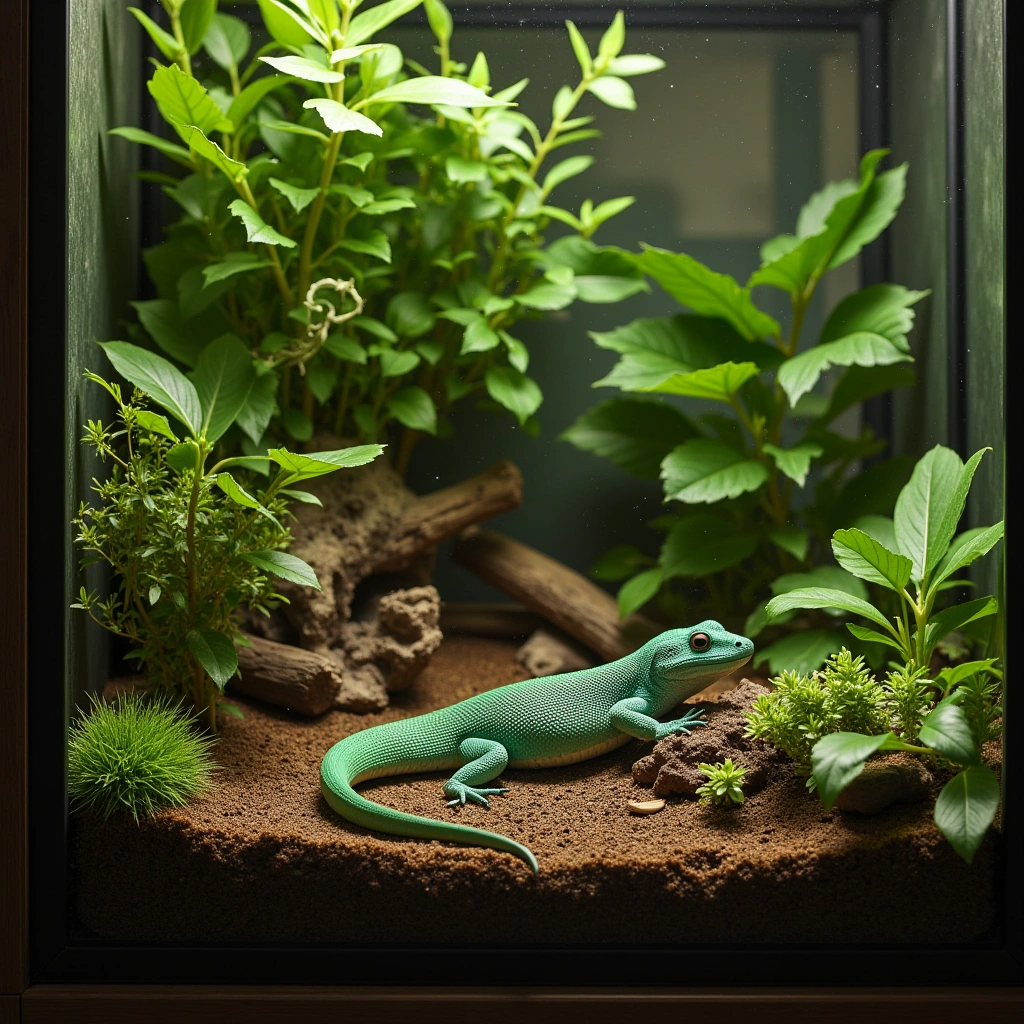
Focus on ground-dwelling reptiles such as emerald tree boas by designing a terrarium that emphasizes the forest floor with leaf litter, decayed wood, and low-lying plants.
Use organic soil substrates enriched with leaf litter to encourage natural foraging. Add moss patches and small logs for hiding.
Keep humidity high and lighting moderate to simulate the shaded understory.
This setup is perfect for homeowners wanting a lush, green terrarium with a dense, layered look.
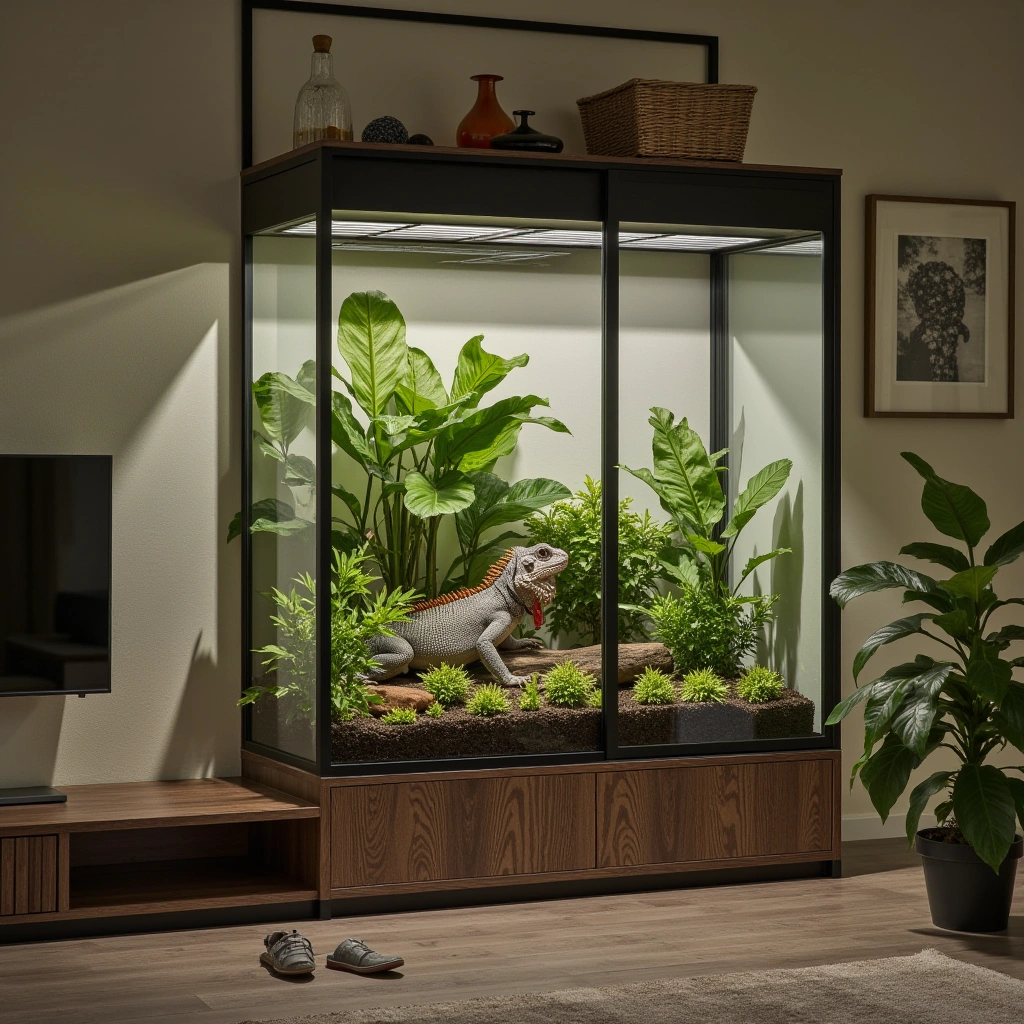
Sleek and transparent, the modern glasshouse terrarium highlights the reptile and plants with minimal visual obstruction. Use frameless glass panels and hidden hinges for a clean look.
Choose minimalist decor: smooth stones, small plants like succulents, and one or two dramatic focal points such as a large branch or skull decoration.
Lighting is key—install adjustable LED strips to simulate different times of day.
This design fits perfectly in urban apartments and modern interiors where the terrarium serves as a live sculpture.
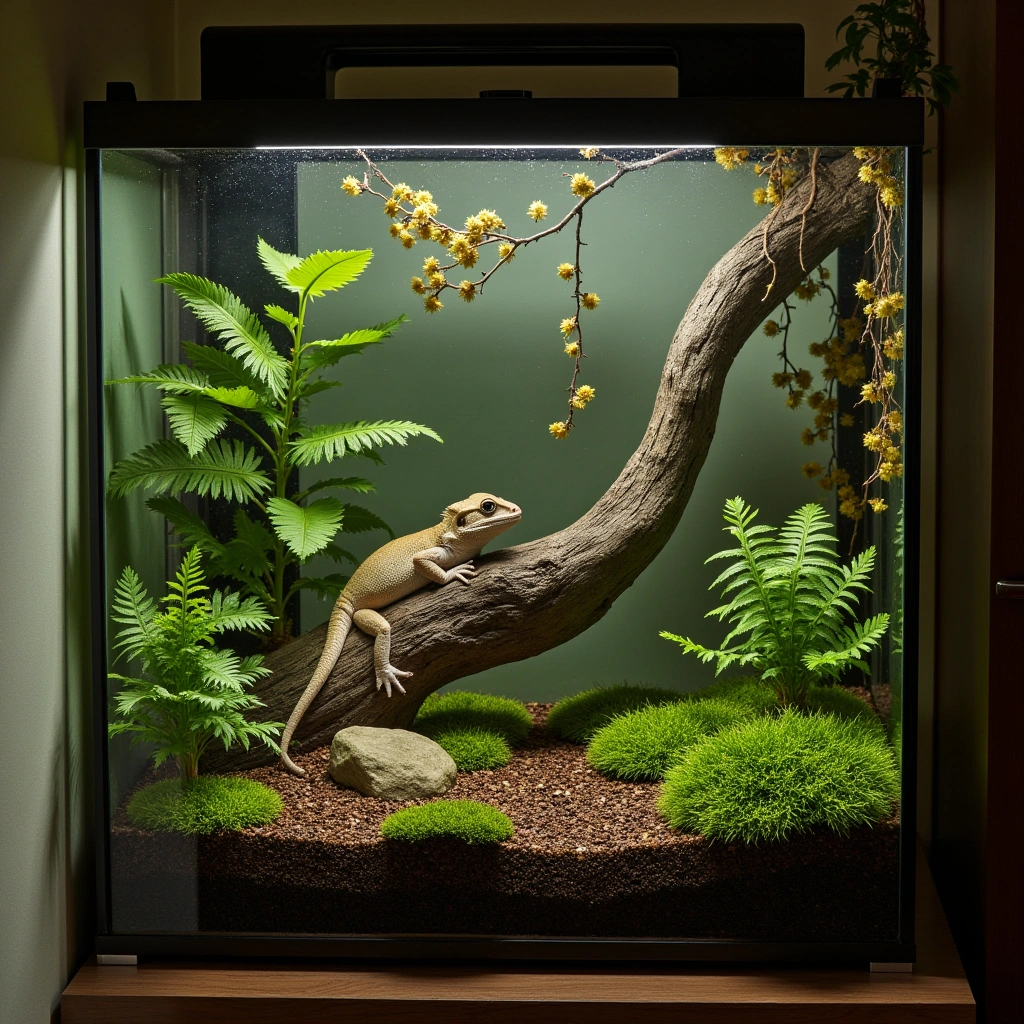
Inspired by temperate forests, this terrarium suits reptiles like crested geckos. Incorporate bark chips, leaf litter, and moss with realistic tree branch structures.
Use artificial or live ferns and small shrubs to add greenery. Maintain moderate humidity with misting.
Lighting is softer, mimicking the dappled sunlight of a forest floor.
This earthy, natural look enhances rustic or cabin-style interiors and provides excellent camouflage for shy species.
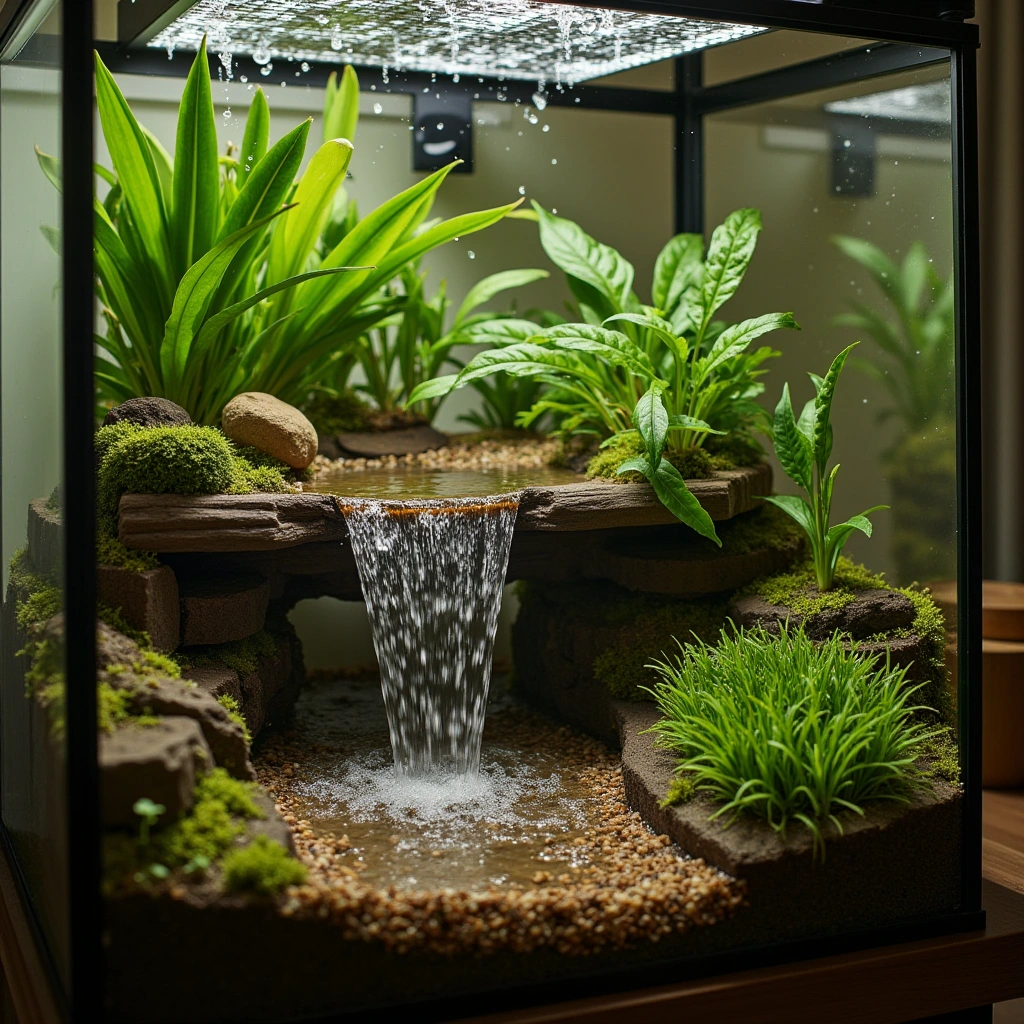
Add a small, functional waterfall inside your terrarium to enhance humidity and visual appeal. This is perfect for species like poison dart frogs or anoles.
Use a water pump to circulate water over rocks, creating soothing sounds and constant moisture.
Surround the waterfall with tropical plants that thrive in humid conditions.
Ensure electrical components are waterproof and safe.
This feature creates a dynamic, peaceful atmosphere that suits nature enthusiasts.
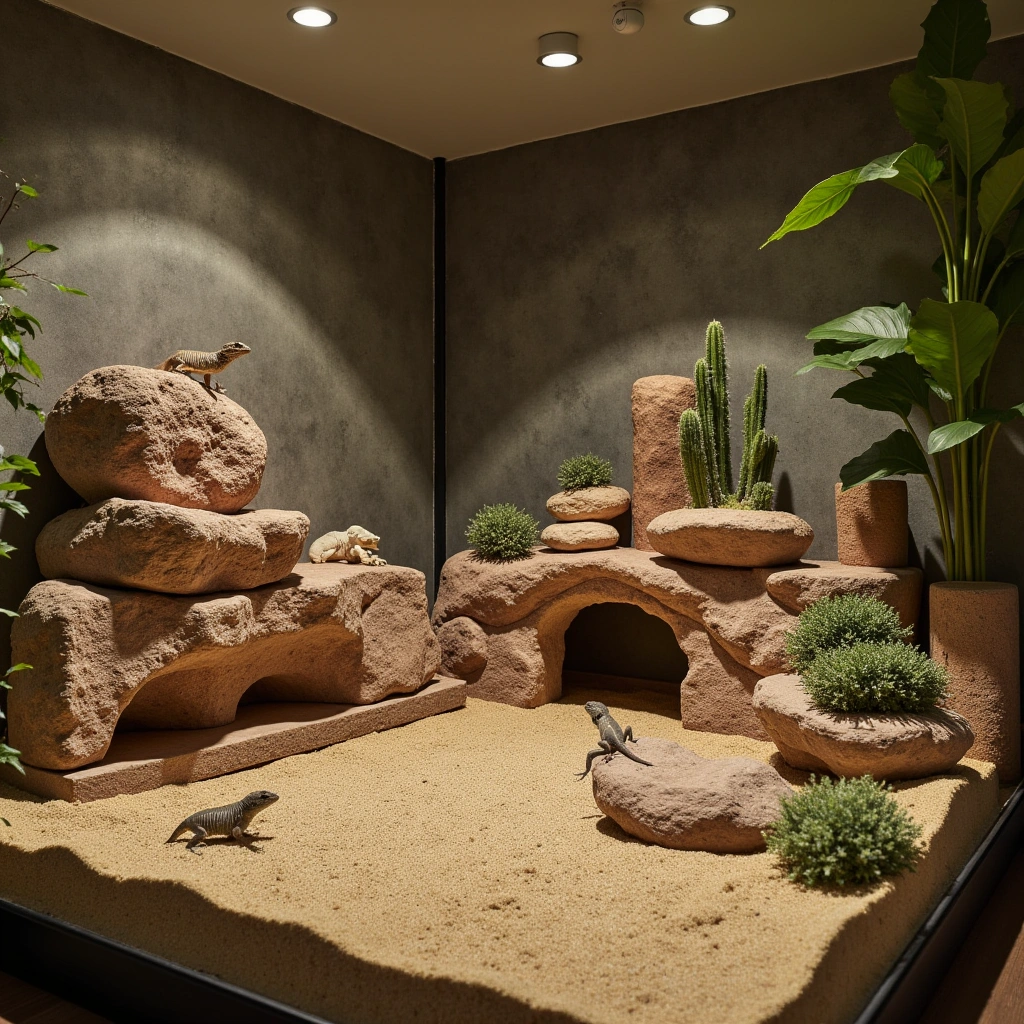
For desert reptiles, incorporating heat-retaining stones like granite or basalt adds functionality and style.
Arrange stones to create basking platforms and caves for hiding. Use warm-toned sands and sparse, desert-adapted plants.
Supplement heat stones with basking bulbs to maintain temperature gradients.
This setup blends practicality with a rugged aesthetic, ideal for southwestern or industrial interiors.
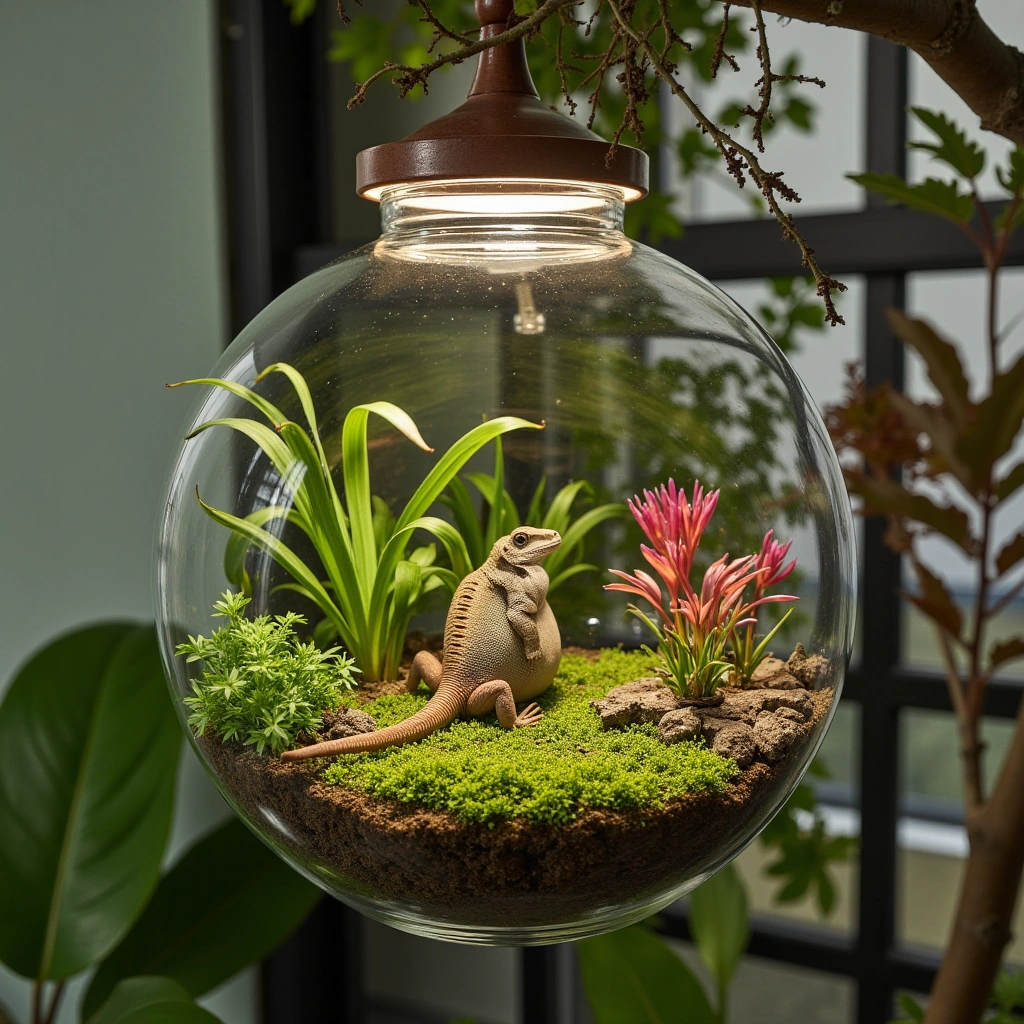
Utilize hanging terrariums or wall-mounted enclosures for small arboreal reptiles or amphibians.
Fill them with epiphytic plants like bromeliads and orchids. Use sphagnum moss and bark for substrate.
This vertical gardening approach saves space and creates a living artwork on your wall.
Perfect for modern, minimalist homes or small spaces.
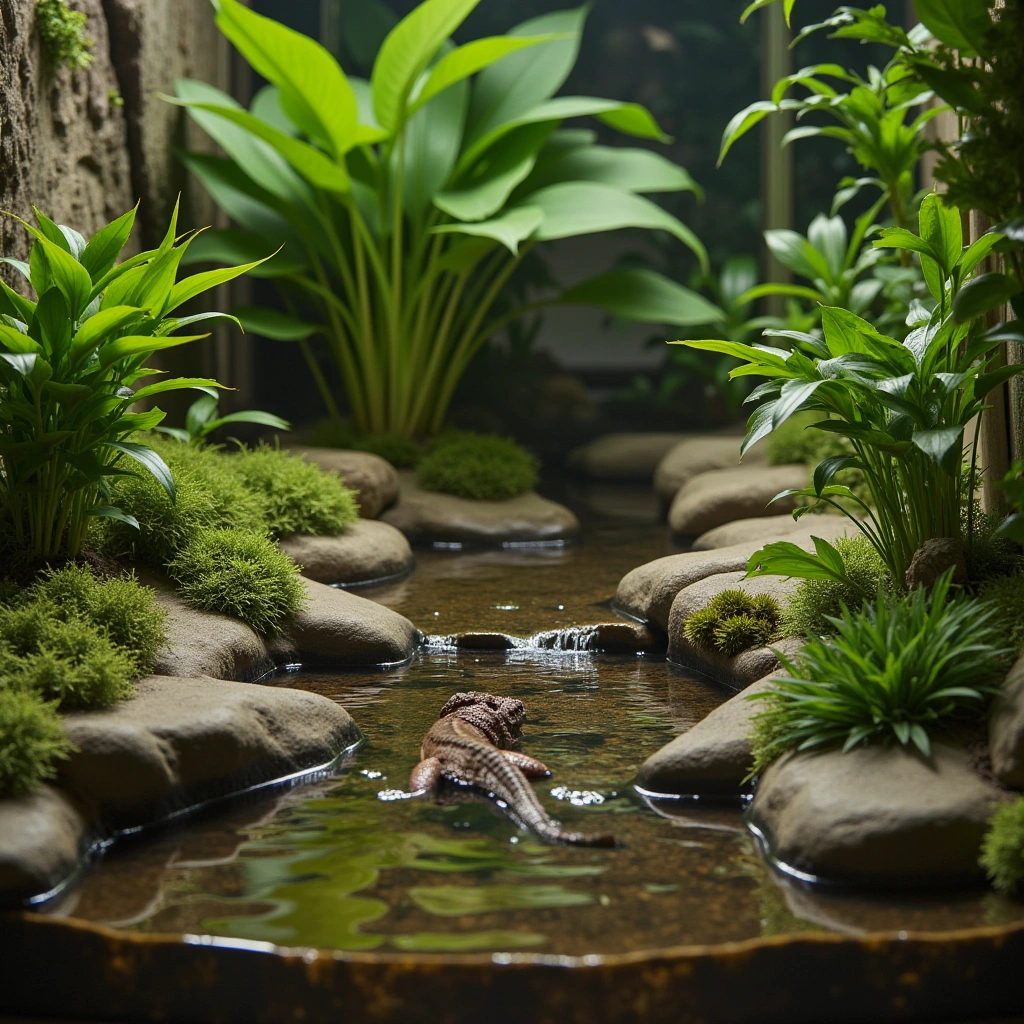
Simulate a forest stream habitat with a shallow water feature, smooth river stones, and moisture-loving plants.
Ideal for semi-aquatic reptiles like water dragons.
Keep water clean with filtration and provide basking rocks near light sources.
This design offers a serene, natural environment that appeals to both reptiles and their keepers.
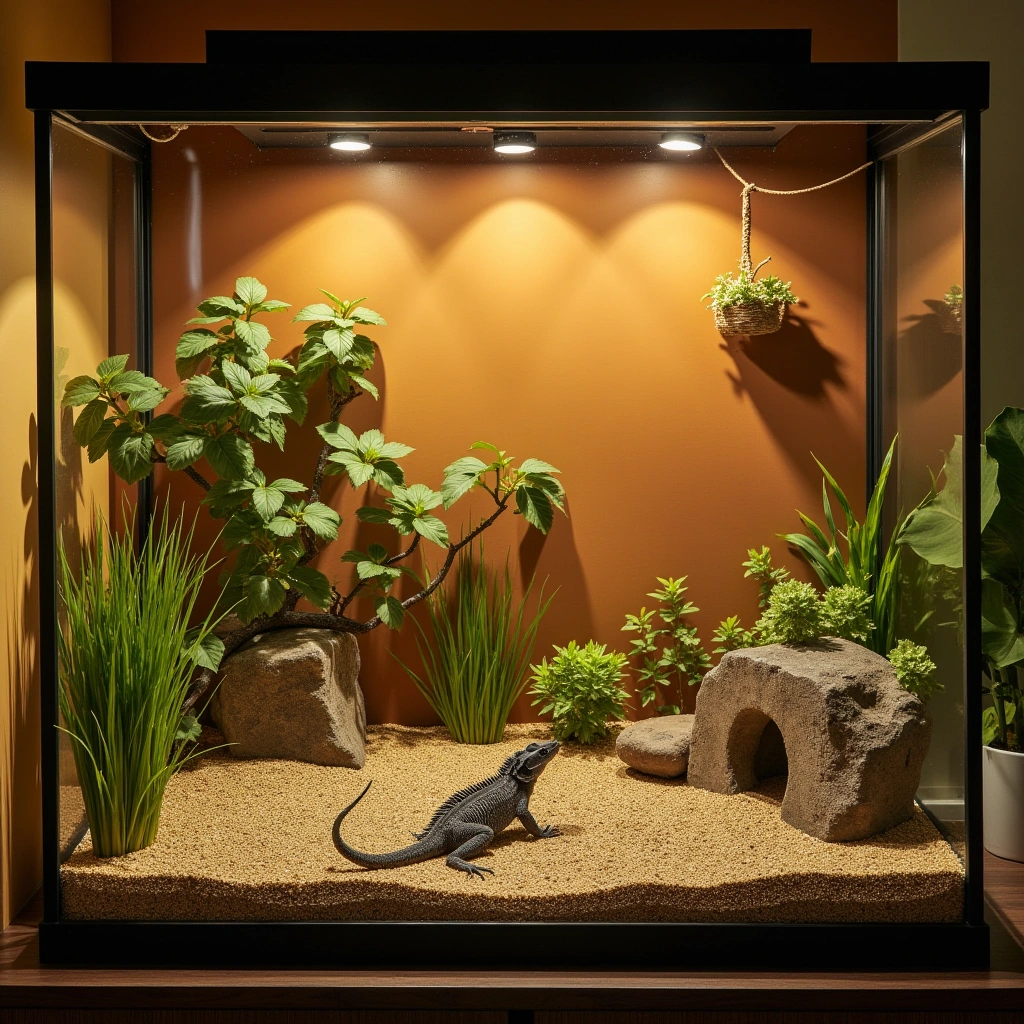
Recreate the savannah environment with sandy soil, sparse grasses, and small shrubs.
Use warm, bright lighting and hide boxes made from natural materials.
This setup suits reptiles adapted to open, sunny habitats and complements naturalistic home decor.
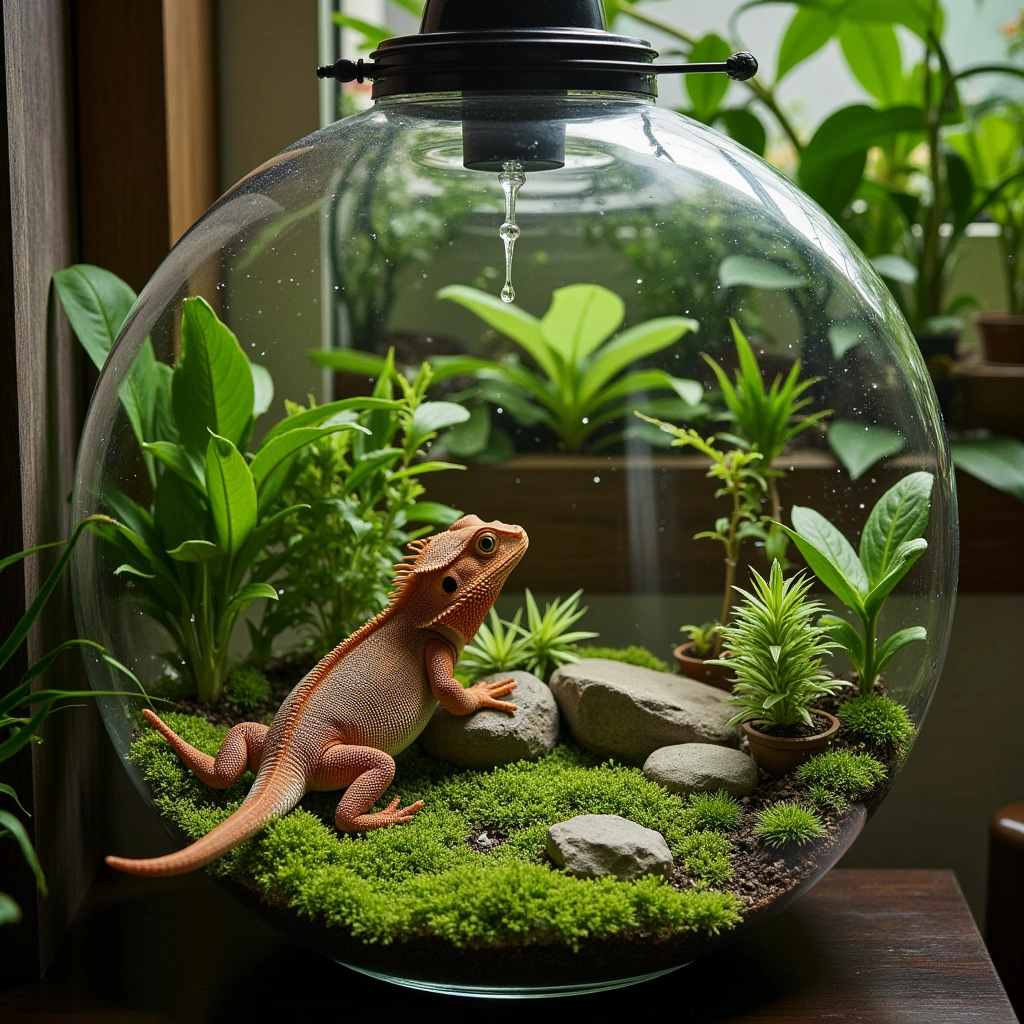
For reptiles like mountain horned dragons, a cloud forest terrarium with cool temperatures, high humidity, and misting features works best.
Use dense moss, orchids, and ferns with drip irrigation systems.
Lighting should simulate diffused sunlight.
This lush, mysterious environment fits well with bohemian or nature-inspired living spaces.
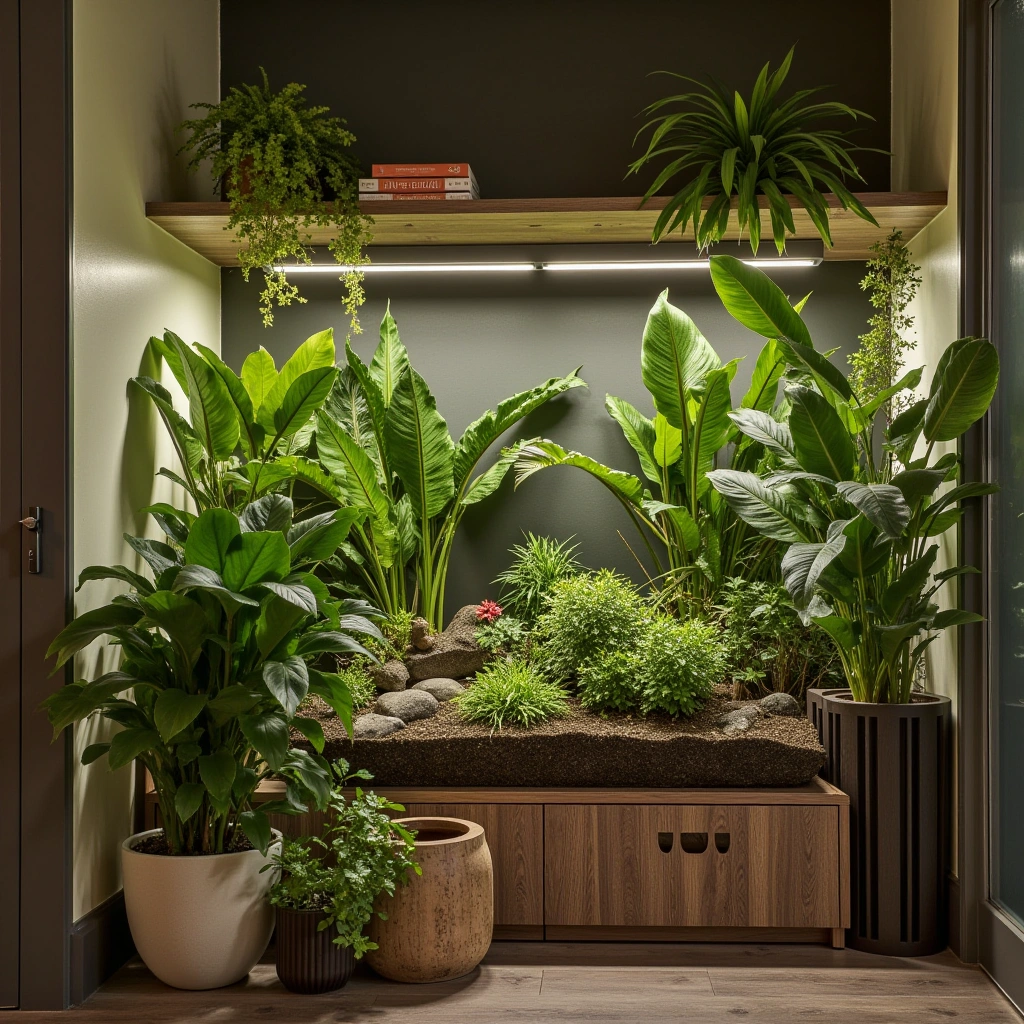
Bring an urban jungle vibe by combining tropical plants with modern decor elements like geometric planters and LED strip lighting.
Use a mix of live and artificial plants to reduce maintenance.
This design balances wild nature with urban chic, ideal for contemporary homes.
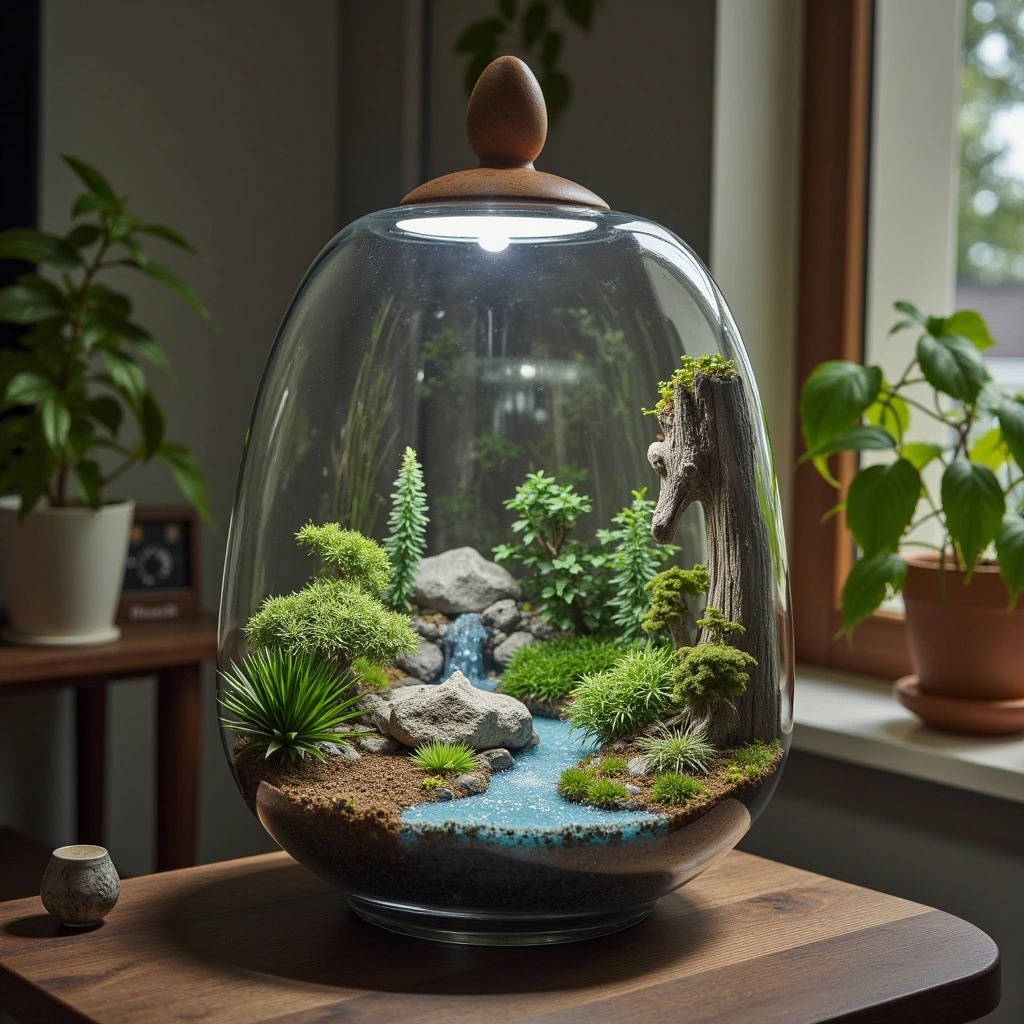
Get creative by designing a custom-themed terrarium—mix biomes or add fantasy elements like miniature castles, dragon statues, or glowing stones.
This allows personalization and imaginative play.
Use safe materials and maintain proper habitat conditions.
Perfect for hobbyists wanting a unique, conversation-starting piece.
Designing the perfect reptile terrarium isn’t just about function—it’s also a chance to express creativity and enhance your living space. From lush tropical rainforests to minimalist modern enclosures, these 17 reptile terrarium ideas offer diverse, practical concepts that cater to your reptile’s needs and your style preferences.
Remember, the best terrarium balances your reptile’s health with aesthetic appeal, making their home a vibrant, comfortable habitat you both enjoy. I hope these ideas inspire you to create a terrarium that’s a true standout in your home.
Happy decorating, and may your reptile thrive in their beautiful new home!